Few casino games carry the same weight of tradition and tactical depth as blackjack, and it remains one of the most requested titles among UK players looking for a game where skill genuinely influences the outcome. Unlike pure chance-based games, blackjack rewards players who understand the maths behind every hand, which is exactly why it has held its place at the top of casino floors and online lobbies for decades.
This guide breaks down everything a player needs before sitting down at a blackjack table, whether that’s a live studio game streamed from a professional dealer or a fast-paced RNG version played solo on a mobile phone. We’ll cover the rules, the betting options, the odds, and the practical side of managing a bankroll sensibly.
Throughout the article you’ll also find pointers to where blackjack fits among the wider casino games line-up, along with a look at how the game behaves differently across its various formats. If you’re new to the game or simply want a refresher before your next session, this should cover the ground you need.
What Is Blackjack?
Blackjack, sometimes called twenty-one, is a card game played against a dealer rather than against other players at the table. The objective is straightforward on the surface: get your hand’s total value as close to 21 as possible without going over, while also beating whatever total the dealer ends up with.
What separates blackjack from most other card games in a casino is that each player’s result is compared only against the dealer, not against the other people seated at the table. That means it’s entirely possible for every player at a full table to win in the same round, or equally for everyone to lose, since each hand plays out as its own individual contest against the house.
The game’s popularity has led to countless variations, but the underlying skeleton stays consistent: cards are dealt, decisions are made about hitting, standing, doubling or splitting, and the dealer follows a fixed set of rules for their own hand. It’s this blend of chance in the deal and choice in the play that keeps blackjack interesting round after round.
How to Play Blackjack: Step by Step
Getting started at a blackjack table is simple once you understand the flow of a round. Below is a practical walkthrough of what happens from the moment you place a wager to when the hand is settled.
- Place your wager. Before any cards are dealt, you choose your stake within the table’s posted limits.
- Receive your first two cards. You’ll typically be dealt two cards face up, while the dealer takes one card face up and one face down (in most European and UK-facing variants).
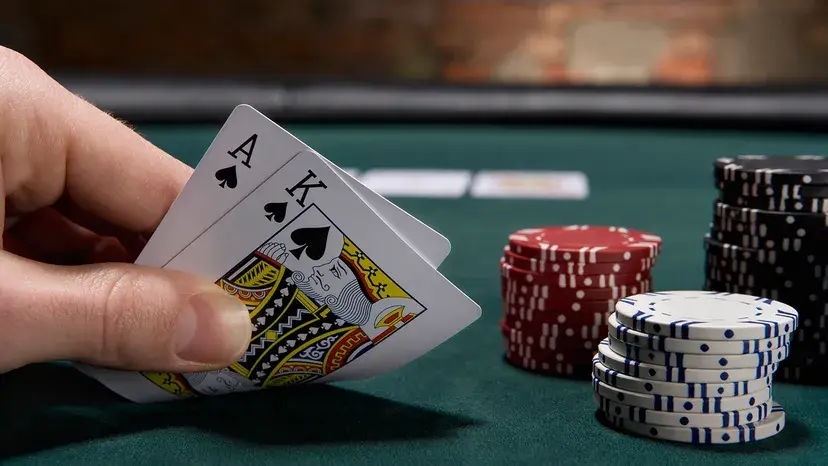
- Check for a natural blackjack. If your first two cards total 21 (an ace paired with a ten-value card), this is usually paid out immediately at enhanced odds, unless the dealer also has a natural.
- Decide your action. With your two cards showing, you choose to hit, stand, double down, or split, depending on what your hand allows.
- Continue until you stand or bust. You can keep hitting to add cards, but if your total exceeds 21 at any point, your hand busts and the wager is lost.
- The dealer reveals their hidden card. Once all players have finished their hands, the dealer turns over the face-down card.
- The dealer plays by fixed rules. The dealer must hit until reaching a set total (commonly 17), with no discretion involved.
- Hands are compared and settled. Bets are paid, pushed (returned as a tie), or collected based on whose total is higher without busting.
Once you’ve played a handful of rounds, this sequence becomes second nature. The real skill in blackjack lies in step four, where basic strategy charts can guide the mathematically correct decision for almost any combination of your hand and the dealer’s visible card.
Blackjack Rules Explained
The core rules of blackjack are easy to grasp, but the finer details can vary between tables, and those details matter more than many players realise. Card values are straightforward: number cards count at face value, face cards (jack, queen, king) count as ten, and the ace can count as either one or eleven, whichever benefits the hand more.
The dealer’s behaviour is governed by house rules rather than choice. In most versions, the dealer must hit on 16 or below and stand on 17, though some tables specify that a “soft 17” (a hand containing an ace counted as eleven) must also be hit. This single rule variation has a measurable effect on the house edge, so it’s worth checking before you sit down at any given table.
Other rule variants affect how many decks are used, whether you can double down after splitting, how many times you’re allowed to split, and whether surrender is offered as an option to forfeit half your bet rather than play out a weak hand. None of these differences are dramatic on their own, but together they shape the overall value proposition of a specific blackjack table.
Popular Blackjack Variants
Blackjack isn’t a single fixed game; it’s a family of related titles that share the same foundation but tweak the rules, deck count, or side features. Recognising these variants helps you pick a table that suits your preferred style of play.
- Classic Blackjack: The traditional multi-deck version with standard hit/stand/split/double rules and no major twists.
- European Blackjack: The dealer receives only one card initially, with the second dealt after players act, which slightly changes optimal strategy.
- Blackjack Switch: Players are dealt two hands and may swap the second cards between them, adding a layer of tactical decision-making.
- Perfect Pairs / Side Bet Variants: Standard blackjack rules with optional side wagers based on the first two cards forming a pair or specific combination.
Each variant tends to carry a slightly different house edge and rule set, so it’s worth reading the table information panel before committing to a session, particularly if side bets are involved, since these usually carry a considerably higher house edge than the main game.
Core Game Mechanics: Cards and Hand Values
Blackjack is played with a standard 52-card deck, or more commonly in casinos, with multiple decks shuffled together (anywhere from one to eight decks depending on the table). The mechanics revolve entirely around hand totals, with the ace’s dual value of one or eleven giving the game its strategic flexibility.
A “soft hand” refers to any total that includes an ace counted as eleven, since the hand can’t bust on the next card (the ace simply drops to a value of one if needed). A “hard hand” has no such flexibility, meaning any additional card risks busting the hand outright. Recognising whether you’re holding a soft or hard total is one of the fundamental skills in playing correctly.
Card counting, a technique that tracks the ratio of high to low cards remaining in the shoe, has become part of blackjack folklore, though it’s largely impractical in modern online and live dealer formats due to frequent shuffling and multiple decks. Understanding basic hand values and soft/hard distinctions remains far more useful for everyday play than counting techniques.
Main Player Actions in Blackjack
Every decision point in blackjack comes down to a handful of core actions. Knowing exactly what each one does, and when it applies, is essential to playing the game with any degree of confidence.
- Hit: Take another card to increase your hand total.
- Stand: Keep your current total and end your turn.
- Double Down: Double your original wager in exchange for exactly one more card, then automatically stand.
- Split: If your first two cards share the same value, separate them into two independent hands, each with its own wager.
- Surrender: Forfeit half your bet and end the hand early, available only at certain tables and only before taking any other action.
- Insurance: A side wager offered when the dealer’s visible card is an ace, paying out if the dealer has a natural blackjack.
- Even Money: Offered when you hold a natural blackjack and the dealer shows an ace, locking in a guaranteed 1:1 payout instead of risking the standard 3:2.
Not every action is available in every situation. Doubling and splitting, for instance, are only permitted on your first two cards, and many tables cap how many times you can re-split a hand. Familiarity with these rules prevents confusion mid-round and keeps the pace of play smooth.
Technical Overview
| Attribute | Details |
|---|---|
| Game Type | Card game (banked against the dealer) |
| Common Variants | Classic, European, Blackjack Switch, Perfect Pairs |
| Typical RTP | Approximately 99% with optimal basic strategy (varies by variant and rule set) |
| House Edge | Approximately 0.5%–1% under standard rules with correct play |
| Player Actions | Hit, Stand, Double Down, Split, Surrender, Insurance |
| Deck Count | Ranges from single-deck to eight-deck shoes depending on the table |
These figures represent industry-standard ranges rather than a guarantee for any single table, since exact RTP and house edge depend on the specific rule variations in play, including dealer-stand rules, doubling restrictions, and payout ratios on a natural blackjack.
It’s worth noting that RTP in blackjack is only achievable through correct strategic play. Deviating from basic strategy, chasing losses, or playing side bets regularly will shift the practical return well below the theoretical figure.
Player Actions Guide
| Action | Description | Possible Outcome |
|---|---|---|
| Hit | Request an additional card to raise your total | Hand improves, or busts if total exceeds 21 |
| Stand | Take no further cards and hold your total | Hand is compared directly against the dealer’s final total |
| Double Down | Double the wager for exactly one extra card | Higher potential payout, but only one card is drawn |
| Split | Separate a matching pair into two hands | Two independent hands played with separate wagers |
| Surrender | Give up the hand early for half the stake back | Half the wager is returned, hand ends immediately |
| Insurance | Side wager against a dealer natural blackjack | Pays out only if the dealer holds a natural blackjack |
Understanding this table is genuinely useful at the table itself, since hesitation over which action to take can slow down play, particularly at a live blackjack table where other players are waiting their turn.
Betting Limits
Blackjack tables at Midnite Casino, like most reputable operators, cater to a wide spread of budgets. Online RNG tables tend to offer lower minimums, sometimes starting from just a pound or two per hand, making the game accessible for casual players who want to enjoy a few rounds without significant risk.
Live dealer blackjack tables generally carry higher minimum stakes due to the cost of running a real studio with a professional dealer, though maximum limits can climb substantially higher for players seeking bigger stakes. VIP or high-roller tables, where available, push these ceilings even further for players comfortable with larger wagers.
Checking the specific limits on a given table before joining is always worthwhile, since these figures can shift depending on demand, table type, and whether you’re playing during peak hours when live tables tend to fill up quickly.
Live Blackjack
Live blackjack brings the atmosphere of a physical casino floor directly to your screen, with a real dealer managing the shoe, dealing cards, and interacting with players through chat in real time. This format has grown enormously in popularity precisely because it removes any doubt about the randomness of the deal, since everything happens visibly on camera.
Most live blackjack studios offer several concurrent tables, each with its own betting limits, dealer, and sometimes its own set of side rules, giving players a genuine choice in atmosphere and pace. Multi-camera angles typically let you follow the action closely, from the shuffle through to the final settlement of hands.
The social element of live blackjack, where players at the same table can see each other’s decisions and occasionally chat with the dealer, is something the RNG format can’t replicate, and it’s a major draw for players who miss the table-game feel of a land-based casino.
Online Blackjack
Online blackjack, powered by a random number generator rather than a live dealer, offers a faster and more private way to play. Rounds move quickly since there’s no need to wait for other players or for a dealer to physically deal cards, which suits players who prefer to get through more hands in a shorter session.
RNG blackjack also tends to come with lower minimum stakes and a wider range of table variants available simultaneously, since there’s no studio capacity limiting how many tables can run at once. This makes it easier to sample different rule sets, such as switching between classic and European variants, without needing to wait for a seat to free up.
For players who want consistency in pace and don’t mind trading the live-dealer atmosphere for speed and flexibility, the online format remains a solid choice, particularly for practising basic strategy without any pressure from other players at the table.
Mobile Blackjack
Blackjack translates well to mobile devices, whether on Android or iPhone, largely because the interface only needs to display a handful of cards and a small set of action buttons at any given time. Most modern blackjack titles are built to run directly in a mobile browser, meaning there’s no need to download a dedicated app to get started.
Playing on mobile also makes it simple to try the demo version of a blackjack game without registering an account first, letting you get a feel for the table rules, RTP, and interface before deciding whether to play with real funds. This is particularly useful for testing an unfamiliar variant before committing any stake.
Touchscreen controls generally make actions like hit, stand, split, and double down intuitive, with clear on-screen prompts showing which actions are available for your current hand, reducing the chance of accidentally tapping the wrong option mid-round.
Demo Play vs Real Money Play
Demo versions of blackjack use virtual credits rather than real funds, giving players a risk-free way to learn the rules, test a new variant, or simply pass the time without financial consequence. This is especially valuable for beginners who want to build confidence with the hit/stand/split/double decision flow before wagering anything.
Real money play, on the other hand, is where the actual stakes of the game come into play, both in terms of financial risk and, for many players, the genuine excitement that only comes from wagering something real. Payouts, RTP, and rule sets are identical between demo and real money versions of the same game, so what you learn in demo mode carries over directly.
Switching between the two modes is usually seamless, and many players use demo mode periodically even after moving to real stakes, simply to test out a strategy adjustment or try an unfamiliar variant before risking money on it.
Beginner Strategy
Basic strategy in blackjack refers to a mathematically derived chart that tells you the statistically correct action (hit, stand, double, or split) for every possible combination of your hand and the dealer’s visible card. Learning this chart doesn’t guarantee winning sessions, but it does bring your practical odds as close as possible to the game’s theoretical RTP.
A useful starting point for beginners is to avoid taking insurance, since this side bet carries a higher house edge than the main game regardless of your own hand. Similarly, standing on hard totals of 17 or higher, and hitting on hard totals of 11 or below, covers a large share of decisions correctly without needing to memorise the full chart immediately.
Doubling down on a total of 11 against a dealer’s low card, and splitting pairs of aces or eights, are two of the most commonly recommended plays in basic strategy, since both tend to shift the odds meaningfully in the player’s favour compared to simply hitting or standing.
Bankroll Management
Managing your bankroll sensibly matters just as much as knowing basic strategy, since even a mathematically sound approach to blackjack can’t guarantee a winning session in the short term. Setting a fixed budget for a session, separate from money needed for other purposes, is the first and most important step.
Many experienced players also set a unit size relative to their overall bankroll, typically wagering a small fraction of their total budget per hand rather than adjusting bet size dramatically after wins or losses. This approach helps smooth out the natural swings that come with any card game and reduces the temptation to chase losses with larger bets.
Deciding on both a loss limit and a win target before you start playing, and sticking to both, is a simple habit that keeps sessions enjoyable rather than stressful, regardless of how individual hands play out.
Advantages and Disadvantages
| Advantages | Disadvantages |
|---|---|
| Low house edge with correct basic strategy | Requires learning strategy to play optimally |
| Wide range of variants and stake levels | Rule variations can significantly affect the odds |
| Available in both live and RNG formats | Side bets like insurance carry a poor house edge |
| Simple core rules that are quick to learn | Fast-paced sessions can lead to quick bankroll depletion without limits |
Weighing these points before choosing a table helps set realistic expectations. Blackjack rewards players who take the time to understand strategy and rule variations, but it’s still a game of chance at its core, and no approach removes the house edge entirely.
Similar Casino Games
Players who enjoy blackjack’s blend of strategy and chance often gravitate toward other card-based table games with comparable mechanics. Baccarat, for instance, shares the same banked-against-the-house structure but with a much simpler set of player decisions. Poker variants like Casino Hold’em also appeal to blackjack fans who enjoy hand-ranking strategy games.
If you’d like to explore the wider range of tables and formats available, it’s worth browsing the full selection of casino games, where you’ll find other card and table titles alongside blackjack, each with its own rule sets and stake ranges to suit different playing styles.
Responsible Gambling
Blackjack, like any casino game, should be approached as entertainment rather than a way to generate income. Setting deposit limits, session time reminders, and self-exclusion tools where needed are all practical steps that help keep play within a comfortable and sustainable range.
UK players have access to a range of support tools and organisations, including GAMSTOP for self-exclusion across licensed operators, and GamCare for free advice and support around problem gambling. Recognising the signs of losing control early makes it far easier to step back before things become difficult.
Account-level tools on Midnite Casino let players set their own limits on deposits, losses, and session length, giving control over how and when blackjack, or any other game, fits into a balanced routine.
Frequently Asked Questions
Is blackjack a game of skill or luck?
Blackjack combines both elements. The cards you’re dealt are random, but the decisions you make afterwards, such as when to hit, stand, split, or double, follow a mathematically optimal pattern known as basic strategy, which meaningfully improves your odds compared to guessing.
What is the house edge in blackjack?
Under standard rules and with correct basic strategy applied consistently, the house edge in blackjack typically sits between roughly 0.5% and 1%, making it one of the lowest house edges of any common casino table game.
Can I play blackjack for free before wagering real money?
Yes, most blackjack titles offer a demo mode using virtual credits, allowing you to practise the rules, test different variants, and get comfortable with the interface without registering an account or risking any real funds.
What does it mean to split a hand in blackjack?
Splitting is available when your first two cards share the same value. It separates them into two independent hands, each requiring its own additional wager equal to your original bet, and each played out separately against the dealer.
Should I always take insurance when offered?
Insurance is generally not recommended as a routine play, since it carries a higher house edge than the main game and only pays out in the specific case where the dealer holds a natural blackjack after showing an ace.
Is live blackjack better than online RNG blackjack?
Neither format is objectively better; they simply suit different preferences. Live blackjack offers a real dealer and social atmosphere, while online RNG blackjack offers faster rounds, lower minimum stakes, and greater privacy.
Can I play blackjack on my mobile phone without downloading an app?
Yes, most modern blackjack games run directly through a mobile browser on Android or iPhone, meaning no dedicated app download is required to access either the demo or real money versions.
What is the difference between a soft hand and a hard hand?
A soft hand includes an ace counted as eleven, meaning it can’t bust on the next card since the ace can drop to a value of one if needed. A hard hand has no such flexibility, so any additional card carries a real risk of busting.